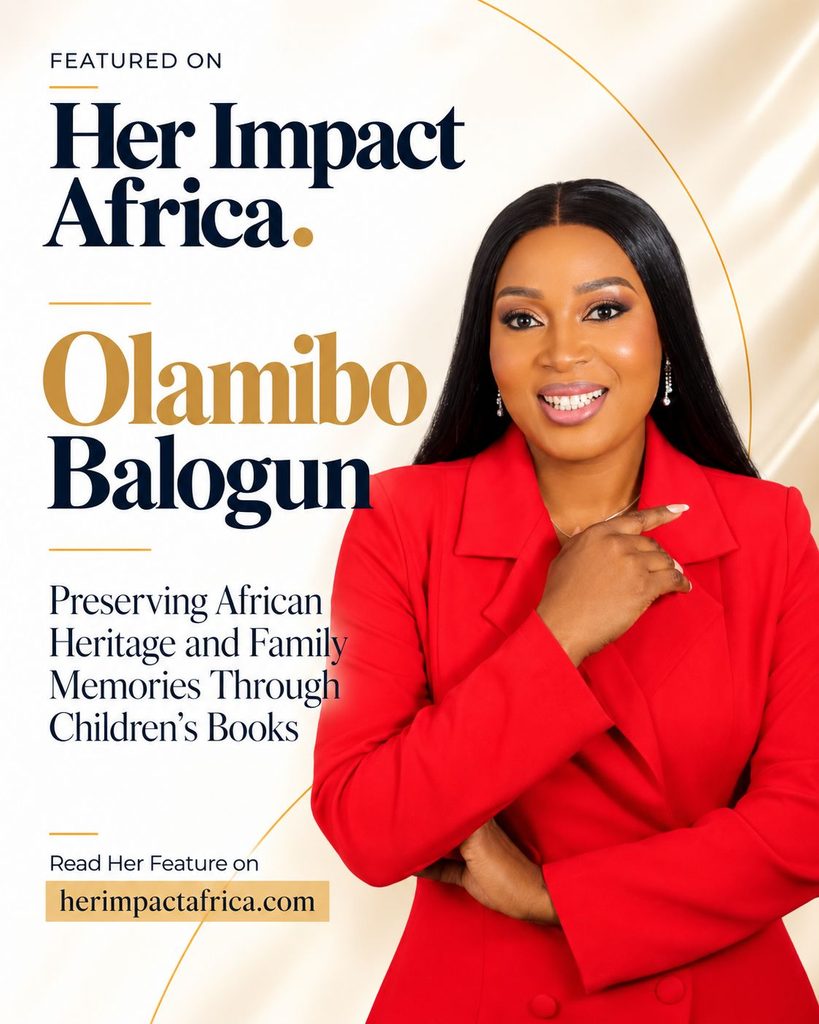

Children’s books can introduce young readers to new worlds, but they can also help them understand their own. Through stories, children can learn about their bodies, navigate difficult experiences, discover the courage to pursue their dreams and develop a deeper appreciation of the people and traditions that shape their lives. For children’s author Olamibo Balogun, these possibilities provide a meaningful foundation for her work.
Balogun’s growing collection of children’s books explores subjects that touch different aspects of childhood and growing up. From girls’ health and personal development to resilience, self-belief and, now, family heritage, her work reflects an interest in stories that do more than entertain. They create opportunities to introduce important conversations to young readers in ways they can understand and relate to.
Her journey as a published author includes Lily’s Little Secret with Mummy (2022), Lily’s Evolution: A Girl’s Guide to Navigating Periods with Confidence (2023), Teenah: The Girl Who Dared to Be Different (2024) and her newest release, Grandmas’ Pots (2026). Together, the books offer a glimpse into the range of subjects she has chosen to explore through children’s literature.
In 2022, Balogun published Lily’s Little Secret with Mummy, a book addressing child protection and the difficult conversations surrounding secrets and personal safety. The story uses a child-focused narrative to approach a subject that can be uncomfortable for children and adults to discuss openly. By bringing the issue into a familiar setting, the book offers an opportunity for parents, caregivers and educators to engage children in conversations about safety, trust and speaking up when something is wrong.
The following year, she published Lily’s Evolution: A Girl’s Guide to Navigating Periods with Confidence, turning her attention to girls’ health and menstrual education. The book follows Lily through an embarrassing experience at school when she discovers a menstrual stain on her clothes and faces ridicule from her classmates. With support from a school counsellor and her mother, she begins to navigate the experience and the emotions surrounding it.
Menstruation remains an important subject in girls’ health education, particularly when misinformation, embarrassment and stigma make it difficult for young people to seek information or support. Through Lily’s experience, Balogun brings the subject into a narrative that encourages understanding and highlights the importance of supportive adults in helping girls approach menstruation with greater confidence.
These first two books establish an important strand in Balogun’s work: creating stories that engage with girls’ well-being and the experiences that can influence their confidence as they grow. Rather than treating these subjects only as lessons to be taught, she approaches them through characters and situations that young readers can follow.
In 2024, Balogun broadened the focus of her storytelling with Teenah: The Girl Who Dared to Be Different. The book explores resilience, self-belief and the possibility of building a meaningful future despite difficult circumstances. At its heart is the idea that a challenging experience does not have to determine the course of a young person’s life.
The story centres on a girl whose circumstances challenge her confidence and aspirations. Through encouragement and mentorship, she begins to see that her future can hold possibilities beyond the limitations others may place on her. The book’s message is particularly relevant to girls whose personal circumstances, including early pregnancy, may lead them to believe that their ambitions must come to an end. Rather than defining a girl by her circumstances, the story encourages readers to consider what becomes possible when she receives support and dares to believe in herself.
The book also reached beyond Nigeria. The Orange Liberia Foundation supported its distribution in Liberia, where the country’s Ministry of Education documented its launch during an International Day of Girls’ Education celebration. The ministry reported that 1,000 copies were printed and distributed. This provided an opportunity for the story’s message of courage and girls’ empowerment to reach young readers through an educational initiative.
With these books, Balogun has explored different experiences that shape the lives of girls and young people. Her stories have addressed personal safety, menstrual health and the importance of believing in one’s future, particularly when circumstances become difficult. Each title approaches a different subject, but together they demonstrate her interest in using children’s literature to make important conversations more accessible.
Her newest book, Grandmas’ Pots, published in 2026, brings another dimension to this collection. Its cover carries the subtitle, “Two grandmas whose pots fed our bodies and whose love shaped our souls.” The words point towards a story rooted in family relationships, the memories associated with food and the influence of grandmothers in shaping the lives of younger generations.
For many African families, food is closely connected to identity and belonging. Traditional meals carry memories of home, while cooking practices and family recipes often pass from one generation to another through observation, participation and shared experiences. Grandmothers frequently occupy an important place in these traditions, preserving familiar ways of preparing food while passing on stories, values and expressions of care.
The cooking pot, in this context, becomes a meaningful image through which to explore the connection between nourishment and love. It speaks to the everyday acts of care that can become lasting childhood memories and the family relationships that help children understand where they come from.
Although the book’s full storyline would provide further insight into its characters and message, its title and subtitle establish a clear cultural and emotional point of entry. Grandmas’ Pots invites attention to the role of family memories in shaping identity and to the traditions that connect children with the generations before them.
The release also expands the range of subjects represented in Balogun’s literary portfolio. After writing about girls’ health, personal safety and resilience, she now turns towards the family and cultural experiences that can shape a child’s sense of belonging. The shift provides an opportunity to consider children’s literature not only as a means of addressing challenges but also as a way of preserving the everyday experiences, relationships and traditions that communities value.
Balogun’s work as an author is complemented by her background in education and literacy development. With more than two decades of teaching experience, she has also worked to encourage children’s reading, writing and creative expression. Through Great Minds Literacy Readers, an initiative she founded, she has developed literacy activities and opportunities for young people to engage with language and storytelling.
Her experience mentoring young writers extends beyond Nigeria. During her service in Liberia through Nigeria’s Technical Aid Corps, she mentored approximately 100 students through a vacation creative writing programme that resulted in five student-led anthologies under the theme Voices of the Future. The experience brought together literacy development and the opportunity for young people to see their own ideas take shape in published collections.
These experiences provide a wider context for understanding her interest in children’s books. Writing for young readers involves more than choosing an interesting subject. It requires an appreciation of the questions children ask, the experiences they encounter and the ways stories can help them make sense of their world.
For Balogun, the four books published between 2022 and 2026 reflect a collection that continues to explore different dimensions of children’s lives. Lily’s Little Secret with Mummy addresses personal safety; Lily’s Evolution focuses on menstrual education and girls’ confidence; Teenah: The Girl Who Dared to Be Different explores resilience and the courage to pursue a future beyond difficult circumstances; and Grandmas’ Pots brings family memories and cultural heritage into focus.
As her body of work grows, these stories offer different ways for young readers to engage with subjects that matter, whether they concern personal development, difficult experiences or the traditions that connect generations.
With Grandmas’ Pots, Olamibo Balogun adds a new chapter to her work as a children’s author, turning attention to the family relationships and cultural memories that help shape who children become. It is a reminder that the stories worth preserving are not only those that teach us how to overcome challenges, but also those that help us remember the people, places and traditions that make us who we are.