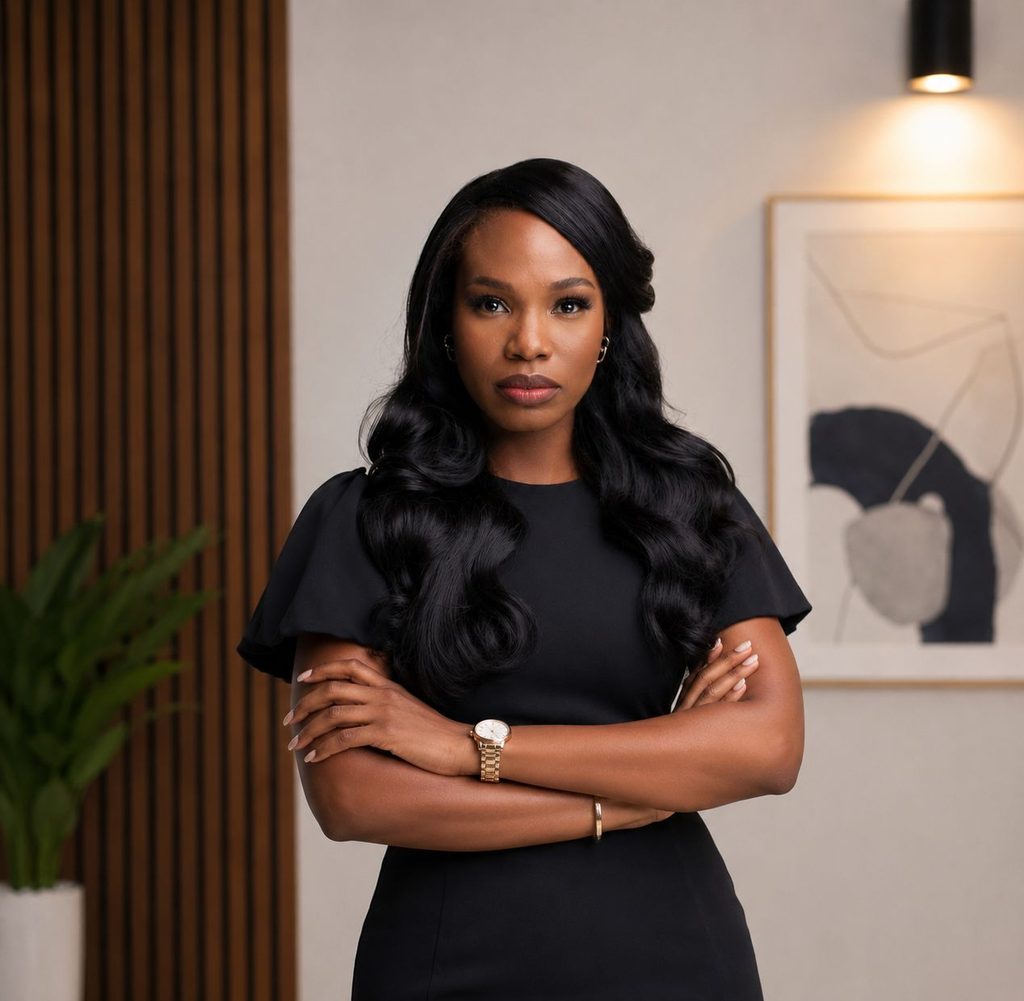

I have always found it interesting when someone’s work cuts across several different issues and, somehow, you can still see the same person behind all of it. That was what stood out to me about Opeyemi Makanjuola.
On paper, there is a lot to take in. She is a nonprofit leader, international development practitioner, sexual and reproductive health and rights specialist, child rights advocate, gender justice practitioner and sustainability professional. She has worked in adolescent development, maternal mental health, gender-based violence prevention, climate literacy and public-sector engagement. That is quite a list. But after looking through her work, I don’t think the list is actually the story. The story is what connects it all.
For years, Makanjuola has worked around issues that many families, communities and even institutions would rather not talk about until they become a problem. She has worked with adolescents who have questions about their bodies, sex, relationships and identity. She has worked with parents who struggle to have some of those conversations with their children. She has worked with survivors of abuse and with the people and organisations responsible for supporting them. And she has also worked on the other side of the equation, with health workers, government agencies and policymakers who have to make these systems work.
That progression is what I found most interesting. As the Founder and Project Director of Bridge-D-Gap Initiative, Makanjuola has mentored more than 46,000 adolescents across Lagos, Ogun and Cross River States. The issues covered by the organisation are broad: puberty education, sexual violence, peer pressure, self-identification, suicide prevention, substance abuse, cyberbullying, gender-based violence and parent-child communication. But perhaps the most important part is that the work does not stop with the young people.
Parents, teachers, counsellors and guardians have also been trained to communicate better with adolescents, recognise abuse and understand what to do when a child needs help. And that makes sense. You cannot keep telling young people to speak up if the adults around them have not been prepared to listen. That has been one of the recurring themes in Makanjuola’s work — the understanding that the young person is often only one part of the problem.
Take sexual and reproductive health. It is easy to tell a teenager to make informed decisions. It is harder to make sure that teenager actually has the information to make those decisions, can ask questions without being shamed, can walk into a health facility and be treated with dignity, and can find support if something goes wrong.
Makanjuola’s current work sits very much in that space. She is currently Health and Rights Manager at Hacey Health Initiative, working in collaboration with the Federal Ministry of Health, where she provides technical and strategic leadership on sexual and reproductive health, maternal health and gender-based violence prevention. She is also leading the development of Nigeria’s Adolescent and Youth Sexual and Reproductive Health Scorecard, a national accountability tool aimed at strengthening monitoring, policy responsiveness and youth-friendly service delivery.
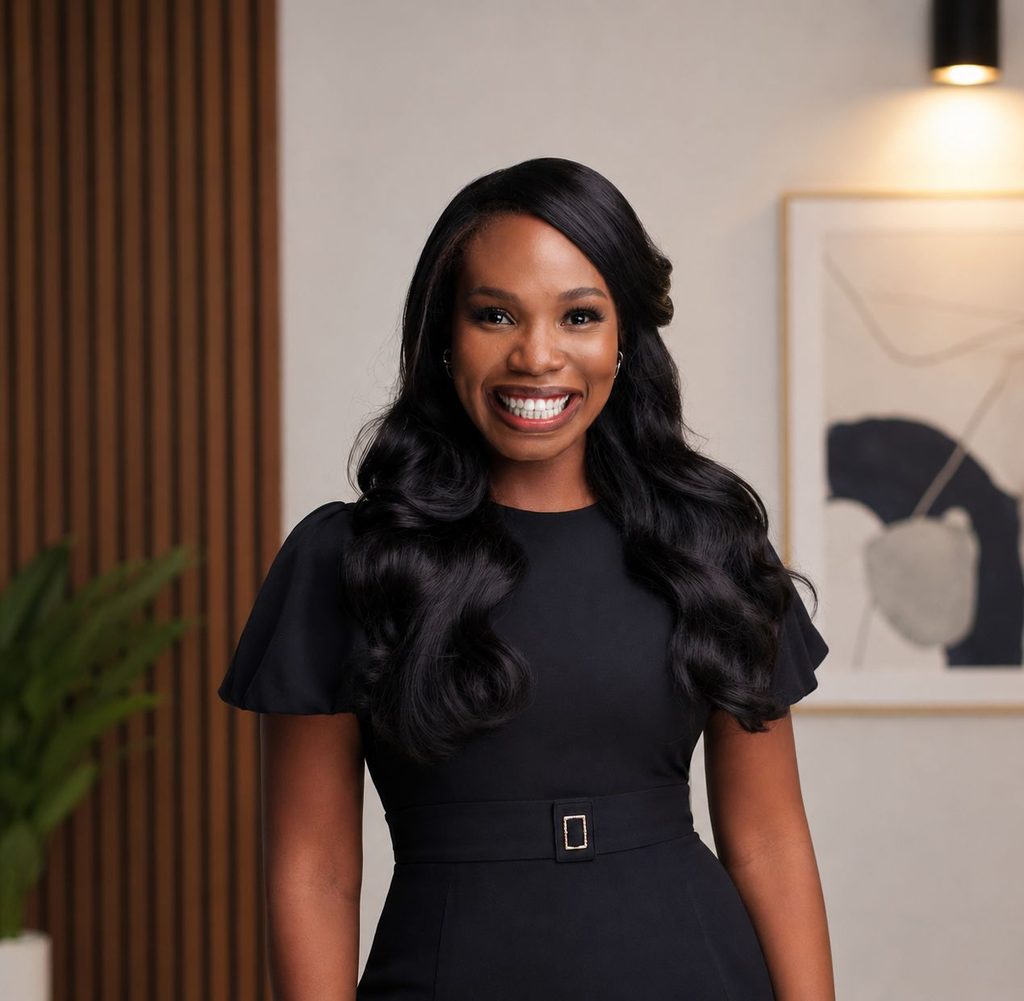
So the work has moved from helping young people understand their world to also asking whether the systems around them are doing enough. She has coordinated technical working group engagements across Lagos, Oyo, Osun, Ekiti and Ondo States, bringing together Ministries of Health and Education, Primary Health Care Boards and Ministries of Youth and Social Development. She has supported advocacy engagements, including with the Oyo State House of Assembly, and has been involved in training more than 100 health providers on youth-friendly health services.
That is a very different room from the classroom where adolescent mentorship happens. But the reason for being there is not really different. It is still about the young person. I think that is what makes her work interesting. She has not treated adolescent development as a single issue.
Her work has also taken her deeper into gender-based violence prevention and community protection. Through Bridge-D-Gap Initiative, she is currently implementing the 15-month Sister Guardian Initiative across six communities in Lagos State. The project is focused on strengthening the prevention, early identification, safe reporting, referral and response to gender-based violence and harmful traditional practices affecting women and girls.
Rather than approaching the work only through formal institutions, the initiative is building a network of women who already hold influence within their communities. Ten women have been selected from each of the six participating communities, bringing the total number of Sister Guardian Executives to 60. They include wives of traditional and religious leaders, police women, school head teachers, health educators, political women leaders, market women leaders and other recognised women leaders who can use their existing relationships and influence to champion the prevention of GBV and harmful traditional practices.
The participating communities span Olubori, Odunfa and Ekore in Oworo, Alayabiagba in Ajeromi-Ifelodun, Mushin/Dosumu, Isale-Odo Ward in Orile-Agege, Abule-Taylor in Agbado/Oke-Odo and Idi-Oro in Odi-Olowo/Ojuwoye.
There is another part of the work that is just as important: what happens when a case is reported. Makanjuola is also involved in training police officers to improve the way GBV cases are managed and responded to, with a target of training 200 police officers in 2026.
Again, different issues. But I don’t think they are as disconnected as they first appear.
A young girl needs accurate information about her body. A mother needs support when she is struggling with her mental health. A survivor needs to know where to go for help. A health worker needs to know how to respond to a teenager without judgement. A community needs to understand why a harmful practice cannot continue simply because it has always been done. And a government needs to know whether the policies it has put in place are actually working.
These are different problems, but they all come back to people having the information, support, protection and systems they need. Perhaps that is why Makanjuola’s career has been so broad. She has not simply stayed with one problem. She has followed the gaps.
Sometimes the gap is knowledge. Sometimes it is communication. Sometimes it is access. Sometimes it is policy. Sometimes it is the distance between what an institution says it does and what a person actually experiences.
Her work through the Own Your Health Campaign is another example. The campaign helped drive conversations around informed reproductive health decision-making, reaching more than five million people through combined online reach and engagement. Youth Amplify Clubs across five tertiary institutions also led more than 50 community-based sexual and reproductive health projects.
But even that is not where the story ends. Because awareness is only useful if something changes after people become aware. And increasingly, that seems to be where Makanjuola’s work is heading — towards the systems that determine what happens after the awareness campaign, after the training, after the conversation.
Her academic background helps explain some of that trajectory. She studied International Law and Diplomacy at Babcock University before going on to earn a postgraduate degree in International Development from the University of Warwick. But qualifications aside, there is something else that stands out.
She has spent years close to the people behind the statistics. She has worked with the adolescent in the classroom, the mother trying to navigate a difficult experience, the survivor looking for support and the health worker who needs better tools. Now she is also working with the institutions that are supposed to serve them.
And perhaps that is the most interesting thing about Opeyemi Makanjuola’s career. It is not simply that she has worked across many issues. It is that she has gradually moved from asking, “How do we help this person?” to asking, “Why does this person need to struggle this much in the first place?”
That is a much bigger question. And it is one that has taken her from mentorship and community work to the policy tables where some of those answers are decided.