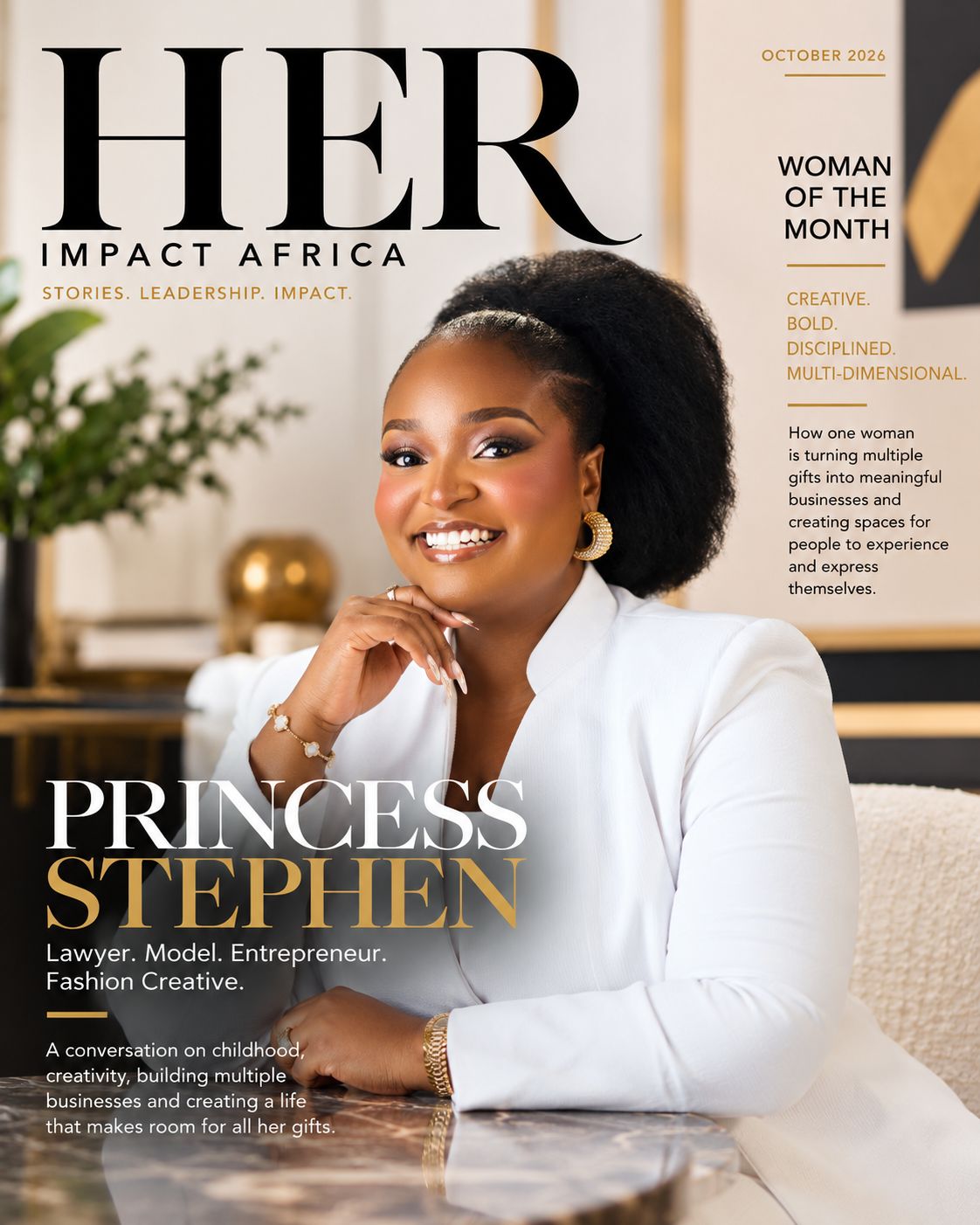

For years, Ijeoma Thomas-Odia has been telling the stories of women. Today, she is one of the women whose own story deserves to be told.
Long before she became the Editor of Guardian Woman, before the awards, the professional recognitions and the growing reputation as a voice on women, media and communication, Ijeoma was simply a young woman who was not quite sure journalism was where she was headed. Law had been her first choice, while Mass Communication was almost the detour. Then she walked into a newsroom, and the detour became the destination.
During her internship at Champion Newspapers in Lagos, Ijeoma encountered journalism up close. She worked alongside editors, desk heads and correspondents who did more than give her routine tasks. They taught her how to approach people, how to ask questions, how to be bold and, perhaps most importantly, how to think like a journalist. She fell in love with the work, and years later, she would look back at those beginnings with gratitude.
That early newsroom experience did more than launch her career. It gave her a skill that would eventually become central to her life’s work: the ability to use her voice to make other people heard.
Journalism gave Ijeoma the opportunity to cover almost everything, but somewhere along the way, the stories about women began to mean something different. Her encounter with the Women Advocates Research and Documentation Centre, WARDC, became particularly significant. She was repeatedly exposed to conversations about women in politics, women in communities and marketplaces, women experiencing violence, and women fighting for justice.
She could have remained the journalist who arrived, covered the event, filed the story and moved on. Instead, something shifted. Ijeoma has described that experience as one that changed her trajectory and thought process. She began moving from simply reporting women’s challenges to wanting to become part of the solution. That distinction is important because it explains much of the career she has built since then. She wasn’t content merely to tell people that women were facing problems; she became interested in what could happen when women were given voice, visibility and opportunity.
This is perhaps the clearest thread running through Ijeoma’s work. She understands something that is easy to underestimate: Being seen can change a person’s trajectory. For a woman building a business, visibility can bring customers. For an organisation doing important work, it can bring partnerships. For an emerging leader, it can create credibility. For an issue affecting women and girls, it can move that issue from the margins into public conversation.
And for someone who has spent years doing meaningful work without recognition, sometimes the first step toward the next opportunity is simply having someone say, “This woman is worth paying attention to.” Ijeoma has made that kind of attention part of her work. Her professional profile describes her as a journalist and PR strategist who is passionate about giving brands publicity, while her work at Guardian Woman has given her a platform to spotlight entrepreneurship, influential personalities and gender issues.
She has also deliberately used her voice to elevate women-owned brands and initiatives, working across the media and women’s-development ecosystem with organisations including WARDC, SheForum Africa, Heirs Women Foundation and BAOBAB for Women’s Human Rights. This is not accidental. It is a philosophy.
Today, Ijeoma is not simply contributing stories to The Guardian. She leads Guardian Woman. That changes the nature of her influence. The journalist who once entered newsrooms learning how to ask better questions now occupies a position where she helps determine which questions deserve to be asked.
Under her editorial leadership, Guardian Woman continues to create space for conversations around women and leadership, entrepreneurship, gender, family, business and social development. Her body of work is substantial: The Guardian currently lists hundreds of articles under her author profile, spanning women’s issues, leadership, entrepreneurship, children, development and social impact. But the number does not tell the whole story, because Ijeoma’s influence is not only in the stories she writes. It is also in the stories she helps bring into the room.
There is a particular quality to the way Ijeoma talks about amplifying women. She speaks about ensuring that women feel heard, celebrated and empowered. She wants their achievements and strengths to take centre stage, not just their struggles. Even the small wins matter because when one woman sees another woman being recognised for what she has built, it can expand her own sense of what is possible.
That belief has made her work especially relevant in a society where women are often visible in statistics but less visible in positions of influence. Ijeoma is interested in changing that, not by speaking over women, but by creating platforms where they can speak for themselves.
There is another layer to her story that makes her journey even more interesting. Ijeoma is not building this career from a single professional identity. She is a journalist, an editor, a gender advocate, a communications professional, a mentor, a wife, a mother of two, and an emerging scholar whose academic interests extend into gender, media and development.
She has continued to invest in her own growth, earning a master’s degree in Mass Communication from the University of Lagos and pursuing further professional development in mentoring, public relations, leadership and media innovation. That commitment to learning has followed her into the next chapter of her career.
The newsroom that first captured her imagination was built around reporters, editors, newspapers and deadlines. Today’s newsroom is increasingly shaped by digital platforms, social media, artificial intelligence and rapidly changing audience behaviour. Ijeoma is not watching that transformation from the sidelines.
Her selection for the fifth cohort of the MTN Media Innovation Programme in 2026 places her among media professionals exploring the intersection of journalism, technology, innovation and digital transformation. And it makes sense because her career has always been about evolution.
She evolved from a young woman who thought she might study law into a journalist, from a journalist into a gender-focused storyteller, from a storyteller into an editor, and now into a media professional thinking seriously about what journalism must become next.
Her own view of the changing media environment is grounded in balance: digital platforms bring speed and new possibilities, but journalism still has a responsibility to provide depth, credibility, context and ethical reporting. Technology can change how quickly a story travels. It cannot replace the responsibility of deciding whether the story is true, or whether it matters, or whose voice is missing.
There is something almost poetic about what happened next. For years, Ijeoma has been the person behind the stories — the person asking the questions, the person introducing audiences to women they may never have known, and the person creating space for other people to be recognised.
Then, in May 2026, the spotlight turned toward her.
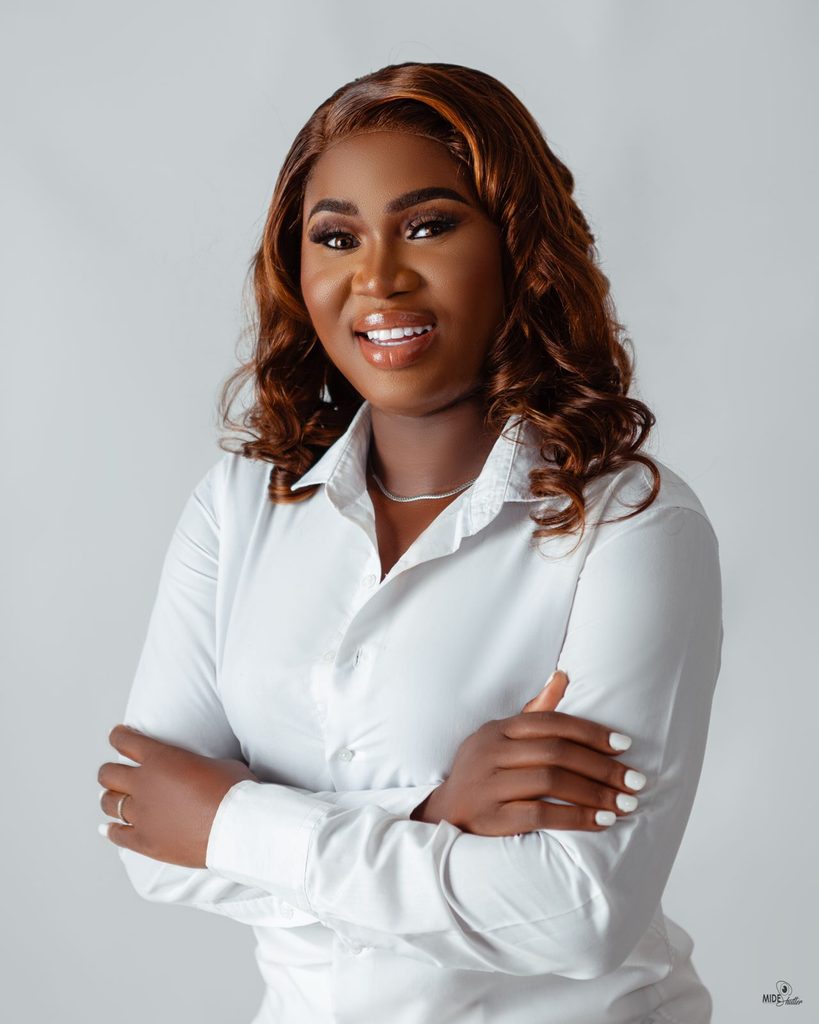
Ijeoma Thomas-Odia was recognised among the Ascent Top 100 Career Women in Africa. And the theme surrounding that recognition could hardly have been more fitting: Power, Presence and Prestige.
The organisers spoke about the relationship between visibility and power, and the importance of ensuring that African women who are building institutions, leading teams and shaping society are not invisible. Ijeoma, the woman who has spent years helping other women become visible, was now being recognised for her own influence.
It is more than an award. It is a marker of a career that has gradually expanded beyond the byline.
There is a temptation to describe Ijeoma simply by her job title: editor, journalist, gender advocate. But those titles don’t quite capture the story. Her real work has been about influence, influencing what people pay attention to, whose stories enter public conversation, how women are represented, how brands and organisations communicate, and increasingly, how technology can reshape the way all of that happens.
She has spent more than a decade building a career in an industry where attention is currency. And rather than keeping that currency for herself, she has consistently used her access to create room for others. That may be the most compelling thing about her story.
She did not begin with a grand plan to become an influential media leader. She simply found herself in a newsroom. She learned the craft. She met women whose stories changed her. She realised that journalism could do more than report what was happening. And then she spent years putting that realisation into practice.
Today, the young woman who once thought Mass Communication might only be a temporary stop has become the editor of one of Nigeria’s most recognisable women-focused media platforms. She has built credibility, influence and a network, and, perhaps most importantly, she has built a career around making sure other people are not overlooked.
So yes, this is a story about a journalist. But it is also a story about a woman who discovered that a voice becomes more powerful when it is used to create room for other voices.
For years, Ijeoma Thomas-Odia stood behind the stories.
Now, it is her turn to be seen.