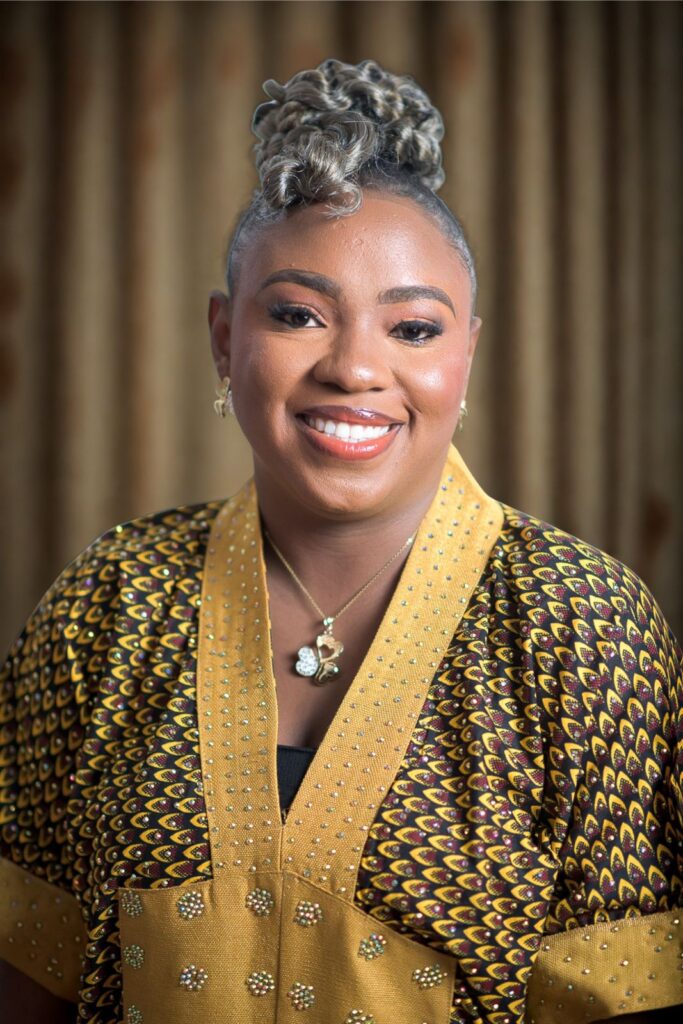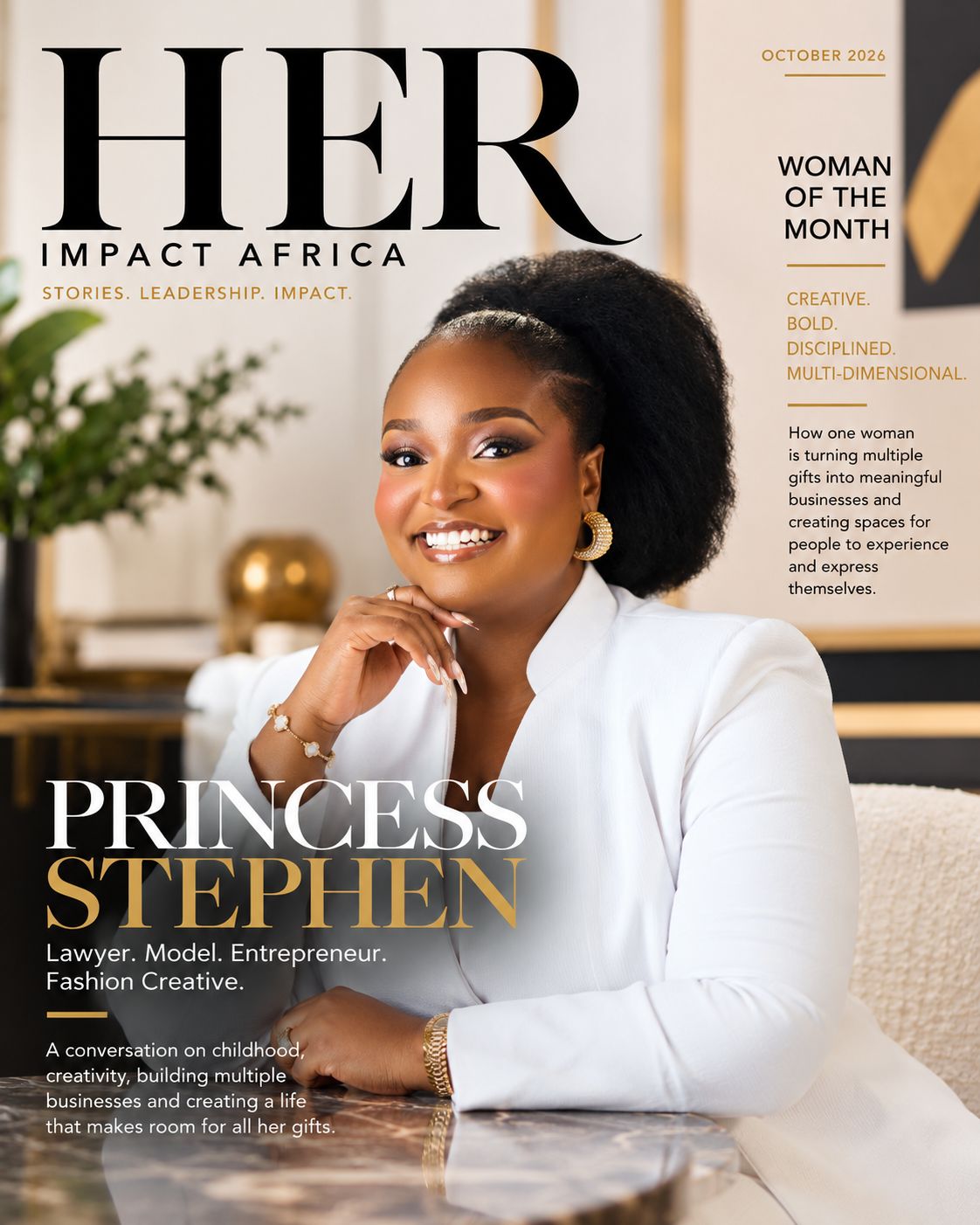

Chiagoziem Adindu has spent almost a decade equipping and empowering people.
That conviction has taken different forms, helping children develop confidence and character beyond the classroom, preparing young people for the transition into work, strengthening professionals’ workplace skills, professionalizing domestic work, and helping employers become more intentional leaders.
Increasingly, however, her work has moved beyond equipping individuals to strengthening the organizations and systems that make sustained impact possible. This question has become central to her work: who equips the people and institutions doing the equipping?
For Adindu, the answer is becoming an important part of how she thinks about social impact.
A Nigeria- and U.S.-licensed lawyer, nonprofit leader, consultant and social-impact advocate, Adindu is the founder of Educate The Citizens International Organization (ETCIO). Her work sits at the intersection of law, nonprofit governance, education, workforce development and organizational capacity building, with a central interest in equipping and empowering the people and institutions that equip and empower others.
Adindu’s journey into social impact began with people. In 2017, while participating in the Venture Management Program, a collaboration between Lagos Business School and Junior Achievement Nigeria, she presented an idea around values-based education. She was challenged to move beyond identifying gaps in Nigeria’s educational system and consider how she could personally become part of the solution.
After nearly two years of wrestling with the many gaps she identified in the Nigerian educational infrastructure, she acted on her idea. In 2019, ETCIO began with a five-day personal development and values workshop for five people in her living room.
Its work has since expanded across values-based education, employability, leadership, workplace readiness and professional development, working with children, young adults, job seekers, professionals, executives, domestic workers and employers. ETCIO has also delivered professional development programs for organizations, addressing workplace communication, professionalism, productivity and organizational culture. One workforce-readiness initiative recorded a 78 percent employment placement rate within three months, reflecting Adindu’s longstanding interest in practical outcomes rather than learning for learning’s sake.
Her philosophy is that education should develop the whole person not just their intellectual faculties. Academic qualifications are important, but she believes education is incomplete when people leave school without the character, confidence, communication skills, emotional intelligence and practical competencies required to transition from the classroom to career or navigate work and life.
That same thinking has shaped one of the more distinctive areas of ETCIO’s work: domestic employment.
Through Maids in Ministry Certificate program, ETCIO worked with domestic workers on personal development, communication, professionalism and service delivery. But the experience reinforced something important: equipping the worker without addressing the environment in which that worker operates can only go so far.
What happens when a worker is trained, but expectations remain unclear? What happens when communication is poor, boundaries are weak, or an employer has never considered safeguarding, dignity or psychological safety?
So, the intervention was expanded to invite domestic employers into the conversation. In July 2026, ETCIO concluded its inaugural Modern Domestic Employer Series, a four-week virtual initiative focused on helping employers build healthier, safer, and better-managed homes. Through live sessions, replays, digital outreach and community engagement, the program reached more than 1,000 domestic employers and interested participants across its program ecosystem, covering employer mindset, values-based hiring, sex-proofing and safeguarding the home, mental health, communication, conflict resolution and household systems.
The initiative also led to the establishment of the Domestic Employers Circle (DEC), an ongoing learning community designed to move participants beyond consuming information toward implementing healthier employment practices within their homes.
The progression—from worker, to employer, to environment and system, reflects a broader principle that increasingly defines Adindu’s work: individual capacity and institutional capacity are immensely connected.
It is a principle she also brings to her work with nonprofits.
Adindu studied law at Babcock University and is licensed to practice in both Nigeria and the United States. She holds an LL.M. in Business Law and is completing a Master’s in Nonprofit Management at the University of Oregon. Her legal training, particularly her orientation toward public-interest work, has found practical expression in how she approaches governance, regulation, institutional accountability and organizational systems, and her work in the nonprofit sector has become one of the ways she uses it.
In the United States, Adindu’s work already includes supporting nonprofit organizations with board governance, sustainability planning, restructuring and organizational systems. Her governance experience includes work with organizations such as American Association of University Women, (AAUW) Eugene Chapter, where she has served on the board as the Vice President of Communications and Bylaws Chair, alongside similar work with other organizations.
Her focus now is to bring more of this work to Nigeria and the wider African nonprofit sector, helping organizations navigate regulatory compliance, board governance, fundraising, restructuring, sustainability planning and the systems required to grow without losing their mission.
For Adindu, this is not a move away from social impact, but an attempt to strengthen its foundations. Social impact is often measured by the people reached: how many children were trained, how many women were supported, how many jobs were created or how many communities benefited. But behind those outcomes are organizations, and the strength of those organizations matters.
A founder can have an extraordinary vision and still lack the governance structure required to sustain it. A nonprofit can deliver excellent programs while remaining dangerously dependent on a single source of funding. An organization can grow faster than its board, policies or internal systems can support. These may appear to be internal organizational problems, but eventually they become impact problems. An organization that cannot sustain its people, systems and mission cannot sustain its impact either.
That is why Adindu is particularly interested in equipping the changemakers themselves; the founders, boards, nonprofit leaders and institutions carrying responsibility for solving some of society’s most difficult problems. Stronger governance, diversified and sustainable funding, effective boards and better organizational systems can multiply the capacity of those institutions to serve the communities that depend on them.
Seen this way, Adindu’s career is a consistent public-interest practice expressed at different levels. Law gave her a framework for understanding rights, regulation, governance and institutional accountability. Education and workforce development kept her connected to individuals and the practical barriers that affect opportunity. Building ETCIO gave her firsthand experience of what it takes to create and sustain a mission-driven organization. Nonprofit governance and consultancy now allow her to apply those experiences to strengthen other organizations.
Whether it’s law, education, workforce development, nonprofit leadership, or governance, Chiagoziem is called to build the capacity of people and institutions in other to create lasting impact.
That approach is particularly important to Adindu because of how she sees Africa.
She is openly optimistic about the continent and rejects narratives that reduce it to deficiency or pity.
“ There is nothing wrong with Africa, ” she says.
She does not say this to deny the continent’s challenges around leadership, governance and institutional development. Rather, she rejects the assumption that those challenges mean Africans are incapable of building better systems. She believes the continent already possesses immense human, cultural, intellectual and economic resources. The work, in her view, is to strengthen the leadership, people and institutions capable of translating those resources into sustainable progress.
The same thinking informs her approach to money and the nonprofit sector.
Adindu rejects the assumption that doing good should require financial struggle or that people in the nonprofit sector should earn less because they are passionate about social change. She does not see enterprise and social impact as opposing ideas and is increasingly interested in conversations around the business and sustainability of nonprofits. For her, sustainability is not something an organization thinks about after the “real work” is complete. It is part of the work.
Her faith remains central to how she understands her journey. Adindu describes her path as nonlinear and consistently guided by God. It has taught her to recognize seasons, take the next step in faith and choose consistency over waiting for perfect clarity. Her faith also informs her commitment to human dignity and her belief that character should find practical expression in how people live, lead and treat others.
That intentionality extends to her life outside work. As a wife and mother, Adindu is passionate about raising godly global children, building healthy marriages and creating a life in which family and meaningful ambition can coexist. She is particularly interested in conversations about faith, marriage, parenting, womanhood and the pressures women face to choose between professional ambition and family life.
Together with her husband, Engineer Frank Adindu, they have written their first book, Certified Learners, drawn from their experiences and reflections on marriage and the continuous learning required to build a life together.
Adindu’s work is increasingly moving upstream. As she continues supporting the people she serves, she is moving towards strengthening the systems and institutions that determine how effectively people can be served. Her philosophy is “equip an individual and an outcome can change. Strengthen an organization that equips hundreds or thousands of individuals, and the effect can multiply across communities.”
That is the driving force behind her growing nonprofit consultancy and her decision to bring more of that work to Nigeria and across Africa.
It also raises a larger question for Africa’s social-impact sector:
What happens when we stop asking only who needs to be empowered and begin asking who—and what—needs to be strengthened to keep empowering others?
For Chiagoziem Adindu, that is not simply the question behind her next chapter. It is increasingly the work itself.