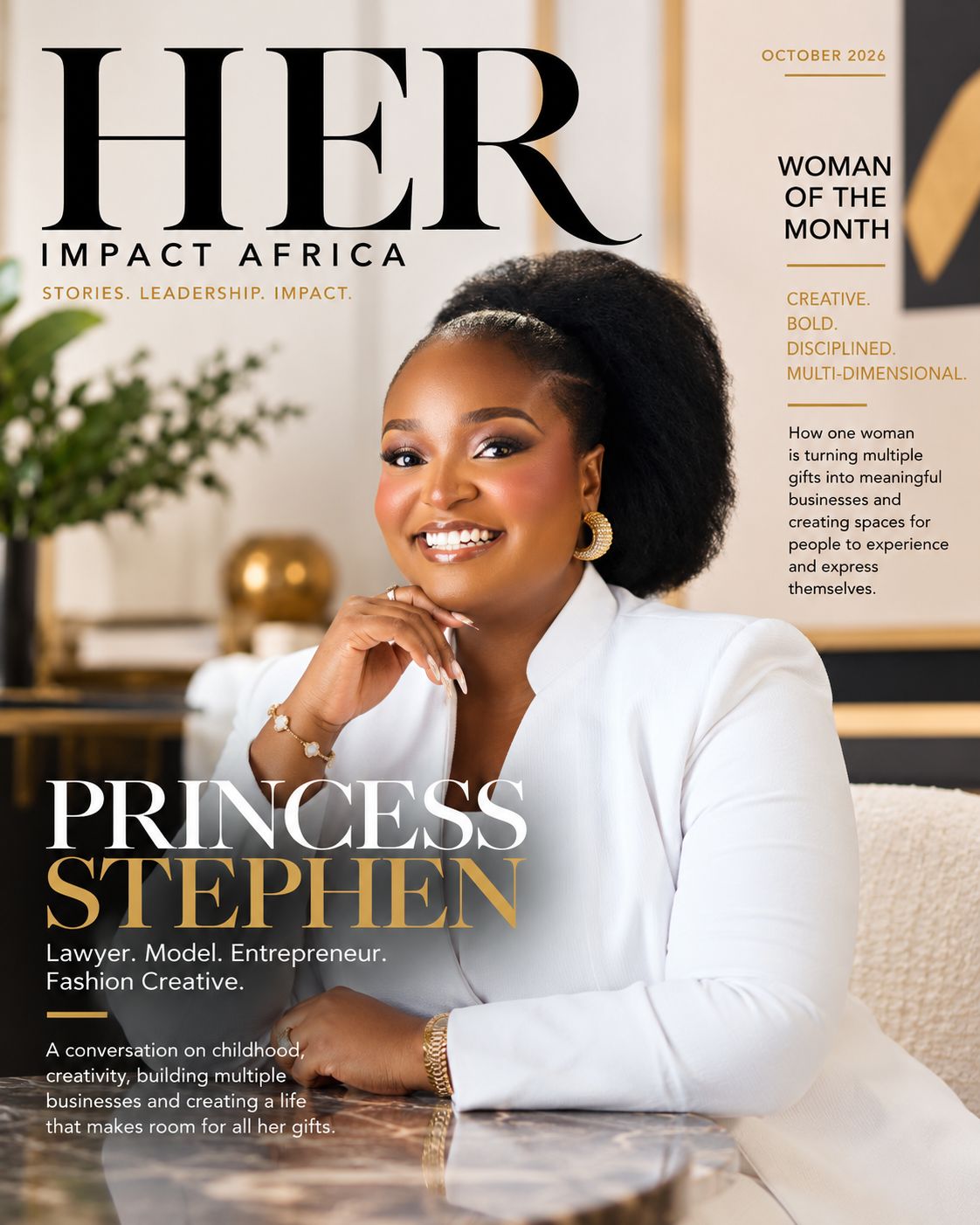

Affiong Ene-Obong is a Nigerian lawyer, author, disability rights advocate, and entrepreneur whose work spans law, literature, fashion, and media. Guided by her Christian faith and a commitment to purpose, impact, and legacy, she uses her voice and work to advocate for children and persons with special needs.
She is the founder of Yellow People Magazine, which amplifies the voices of persons with special needs; Yellow People Media, a media and entertainment company developing content for children; and Skirts & Rompers Ltd., a children’s clothing and lifestyle company focused on inclusion, representation, and creativity.
Through her legal work, writing, and entrepreneurial ventures, Affiong continues to challenge perceptions about disability and champion a more inclusive society.
In this interview with HER Impact Africa (HIA), she opens up about the values that guide her life, how living with cerebral palsy has shaped her journey, her passion for law and storytelling, and the importance of creating opportunities for children and persons with special needs. She also shares a message for young people finding their way in life: “Purpose is genuinely discovered in God. Starve your distractions and feed your focus.”
HIA: Beyond your titles, degrees, books, and businesses, who is Affiong Ene-Obong? What values guide the way you live?
Affiong: I am a woman guided by my identity in Christ and what I believe I have been called to do on earth: to live a life of purpose, impact, and legacy.
I earnestly desire to fulfil my truest expression as a human being, spreading light, love, and hope, and helping others through my gift of writing.
Integrity, purpose, stewardship, accountability, legacy, honour, love, and respect guide the way I live.
HIA: How has living with cerebral palsy shaped your identity, ambitions, and advocacy?
Affiong: Living with cerebral palsy has helped me understand that I am unique, and that does not stop me from living fully and confidently in pursuit of my purpose.
I believe every part of the human body complements another, so when one part cannot, others can.
My mind is my greatest asset. It is rich with great ideas and possibilities, and I constantly nurture and challenge it. It works wonders for me.
I know who I am, I believe in what I am called to do, and I will keep reaching out to those I am called to serve.
Living with special needs has helped me understand that I am unstoppable and that I can do all things through Christ.
HIA: Your work includes child rights and child justice administration. What needs to change to ensure that children’s rights are protected in practice?
Affiong: Children are human beings and holders of their own rights. The best interests of the child must be the fundamental principle governing all matters concerning child justice.
Section 1 of the Child Rights Act 2003 provides that the best interests of the child shall be the primary consideration in every action concerning a child.
As a child rights specialist, I would prioritise three key areas.
First, effective implementation and accountability. Governments must go beyond adopting child protection laws to ensuring their effective implementation. Child justice is a shared responsibility, requiring actionable steps from governments, institutions, and duty bearers. The law must not only be known but also enforced and sustained through accountability.
Second, a child-friendly justice system. Child participation is a core principle of child justice. Children should be recognised as rights holders and active participants in decisions affecting their lives, with their views given due consideration in line with their age and maturity.
Third, collaboration, monitoring, and communication. Parents, governments, and institutions must work together to advance child rights and child justice administration. This requires effective collaboration, monitoring, and evaluation of existing laws, policies, and practices to ensure that children’s rights are protected.
HIA: What inspired you to study law, and what impact did you hope to make when you chose the profession?
Affiong: My desire to make an impact in the justice system inspired me to study law. Intellectual curiosity and a passion for justice, equality, and advocacy propelled me towards the profession.
My love for writing, reading, and art also influenced my decision. As a lawyer, language is my tool of trade. From an early age, I learnt to develop and master this tool, which has helped me learn, grow, and become who I am today.
The legal profession has helped me evolve and commit to excellence, innovation, and lifelong learning.
I hoped to inspire, impact, and transform lives through law, and I am living that dream to God’s glory.
HIA: You have explored several career paths and creative interests. How do you know when it is time to embrace a new direction?
Affiong: For me, embracing a new direction comes with a nudge in my spirit, an inner witness, and wisdom.
Through prayer, perseverance, and people, I discern when it is time to pivot, and I take that leap of faith.
HIA: What do people misunderstand most about disability and inclusion, particularly regarding women and girls with special needs?
Affiong: I believe there are several misconceptions about disability and inclusion.
First, people often equate disability with inability. They think persons with disabilities cannot live fully and independently in society. The reality is that disability does not erase intelligence, ambition, or potential.
Second, some people believe that girls and women with disabilities do not deserve the same opportunities as others. The rights of children are inherent, and we must learn to invest in girls’ rights. The best interests of girls should be a primary consideration in matters concerning them, just as they should be for women.
Third, inclusion is often mistaken for simply allowing someone to be present. True inclusion means belonging, participation, accessibility, respect, and having a meaningful voice, not merely being in the room.
Finally, inclusion is sometimes treated as an act of kindness or charity. In reality, it is about rights, non-discrimination, and removing barriers to life, survival, and development. Girls and women with disabilities are rights holders, not objects of oppression, slavery, or hardship.
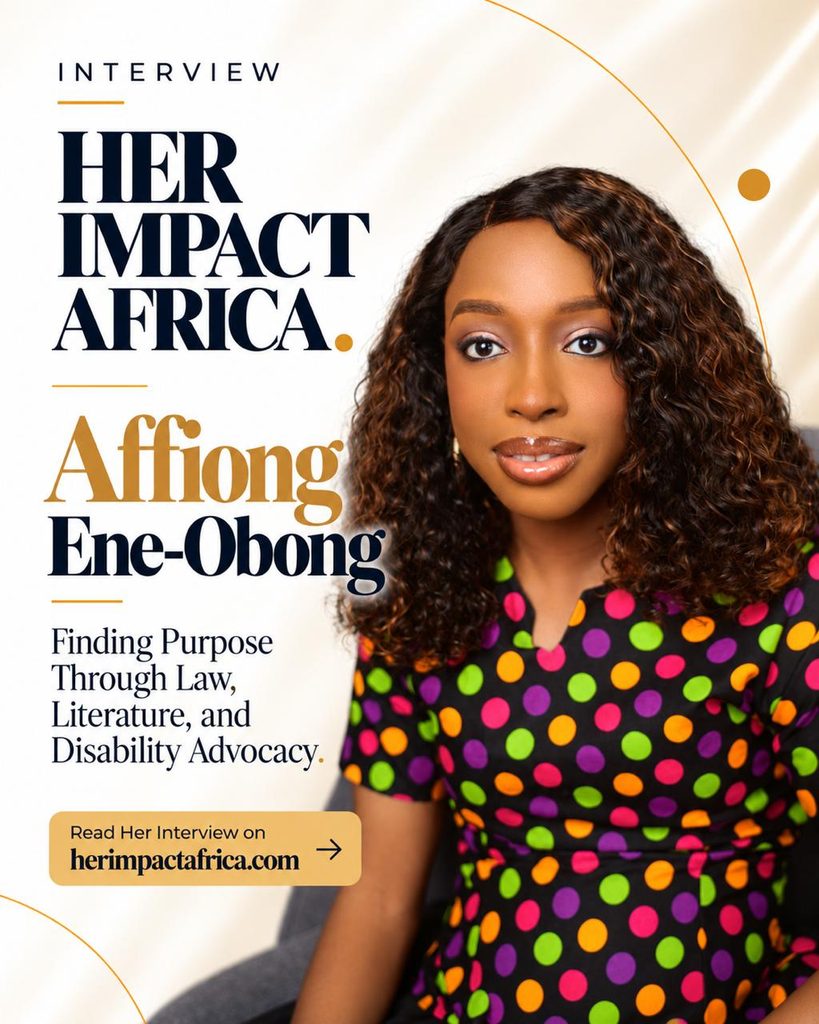
HIA: What inspired you to establish Yellow People Magazine, and how can storytelling change perceptions about disability?
Affiong: Storytelling is a powerful tool that can change perceptions about disability. At Yellow People Magazine, our mission is to share inspirational stories told by and for persons with special needs.
We understand that representation is important, and we have created a unique media platform for persons with special needs to lend their voices and share their experiences.
Over the years, we have been able to inspire, inform, and impact lives by challenging stereotypes and advocating for awareness, acceptance, and appreciation of persons with special needs, nationally and globally.
HIA: What do you hope readers take away from books like After the Storm and Miracle in Our Hearts?
Affiong: Through these books, I want readers to understand the importance of love, acceptance, empathy, and respect for persons with special needs.
After the Storm emphasises filial love, acceptance, and non-discrimination. It is also a call to action for parents, governments, and duty bearers to address issues such as medical negligence, accessibility, and the right to healthcare, particularly for children and women.
Miracle in Our Hearts highlights the importance of empathy, kindness, and respect for all human beings, particularly those with special needs.
HIA: What inspired you to establish Skirts & Rompers Ltd., and how do you incorporate inclusion into the products and experiences you create for children?
Affiong: Skirts & Rompers Ltd. is a children’s clothing and lifestyle company designed to promote unique and inclusive clothing, lifestyle products, and experiential services for children and families.
Our goal is to empower children through representation and inclusive play, with dolls and plush toys representing diverse abilities and backgrounds across Africa and beyond.
Our clothing collection will include wrap-style rompers, adjustable waistbands, and button or zip designs to promote comfort and accessibility.
Our affirmation products are also designed to boost children’s confidence and spark creativity.
HIA: If you were speaking to young people still figuring out who they are and what they want from life, what is the one message you would want every one of them to leave with?
Affiong: As young people navigate life, discover who they are, and try to understand what they are called to do, I believe it is important to remain connected to God and focused on what truly matters.
Purpose is genuinely discovered in God. Starve your distractions and feed your focus.