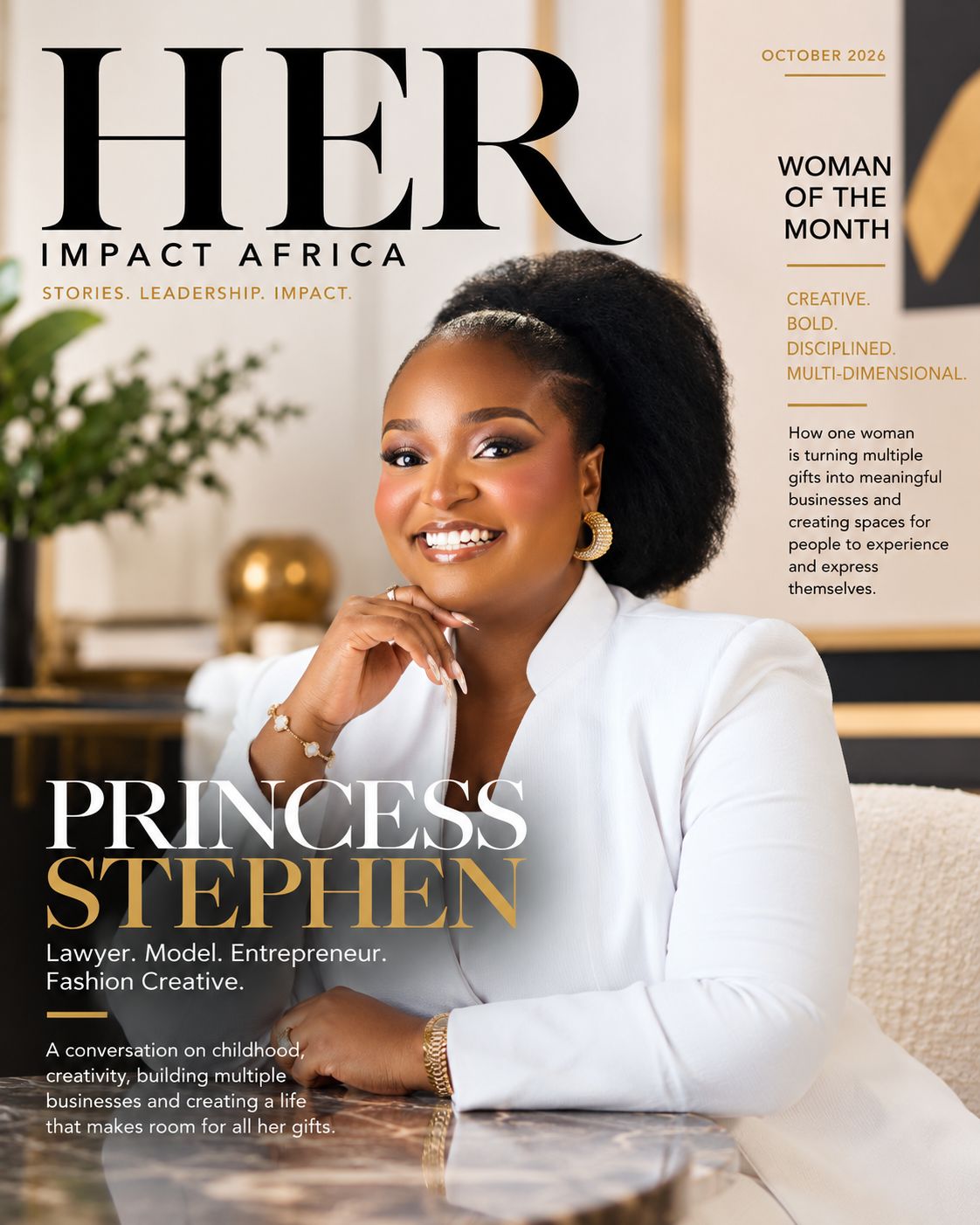

Some people begin their careers with a clear idea of where they want to go. Others discover their purpose through the people they meet, the challenges they witness and the things they eventually decide they can no longer ignore.
For Christianah Oyebusola Oyeleye, a career in nursing has evolved into a broader commitment to improving access to healthcare and changing the systems that determine who receives care and who gets left behind.
A cardiovascular nurse and public health professional, Christianah is the Founder and Executive Director of the Congenital Heart Disease Foundation of Nigeria (CHDFNigeria), an organisation established in 2020 to improve awareness, expand access to care, support families affected by congenital heart disease and advocate for stronger health systems.
With over 12 years of clinical experience spanning paediatric cardiology, adult cardiology, cardiothoracic surgery and cardiac intensive care, she has worked across Nigeria and the United Kingdom. Her work also extends to health policy, research coordination, capacity building and global health advocacy. Through engagements at international health platforms, including United Nations high-level meetings and the World Health Assembly, she continues to bring frontline experiences into conversations about health equity and systems change.
Yet, behind these professional milestones is a woman whose instinct to care for others began long before she entered a hospital or founded an organisation.
In this interview with Her Impact Africa (HIA), Christianah reflects on the experiences that shaped her journey, the realities that inspired her to establish CHDFNigeria, the lessons she has drawn from working across two healthcare systems, and her vision for a future where a child’s chance of survival is not determined by their family’s financial circumstances. She also shares the personal interests that keep her grounded and offers advice to young African women who are still discovering what is possible for them.
HIA: You are a cardiovascular nurse, a public health professional and the Executive Director of a national health organisation. But none of those titles tells us who you were before all of this began. Where does your story really start?
Christianah: My story starts with a very early instinct to care for and look out for other people, something I had grown up watching my mum do quite early in my childhood. She never catered only for our family; she always made enough to share with our neighbours. She would reach out to families who needed clothing, support a child’s education, and simply find ways to help.
Interestingly, nursing was not my original plan. As a young girl, I loved tending to flowers and pet animals. I always imagined I would become a horticulturist or maybe just own a farm. My grandfather, however, noticed my tenderness and instinct to care for things and people. While I was applying for JAMB that year, he influenced my decision to apply for Nursing.
I went through nursing school, graduating as one of the best in my class at the age of 19. My professional specialisation thereafter eventually led me into cardiology, and my clinical practice brought me closer to children living with congenital heart disease. That was where my personal commitment to equity met a professional purpose.
Looking back, I don’t think my journey into healthcare leadership began with a job title. It began with a little girl who was always looking out for other people, like I grew up watching my mother do.
HIA: You eventually founded the Congenital Heart Disease Foundation of Nigeria. What were you angry about, concerned about, or unwilling to accept that made you start it?
Christianah: I think my motivation to establish CHDFNigeria goes back to my longstanding concern about inequality and the circumstances that determine people’s access to opportunities, including survival and outcomes in the Nigerian healthcare system.
Working in paediatric cardiac care brought that concern into focus. I encountered children with congenital heart disease whose survival depended on their families’ ability to access specialised services, afford treatment and navigate a highly complex healthcare system that often offered them little or no support. Knowing that a child could have a treatable condition and still be unable to access lifesaving care, or lose their life while accessing treatment for a condition that could be managed with little or no risk of mortality, was something I struggled to accept.
As a paediatric cardiac nurse, I cared for several children with congenital heart disease, but I was increasingly conscious of the many other children we were not reaching and the multifactorial barriers causing this limitation. I realised that my responsibility could not end at the bedside.
I wanted to build something that would go beyond individual patient support to address the wider challenges surrounding congenital heart disease in Nigeria. That conviction led me to establish the Congenital Heart Disease Foundation of Nigeria in 2020, with the goals of improving awareness, expanding access to care, supporting families and advocating for the changes needed to make congenital heart disease a recognised priority within our health system.
For me, establishing CHDFNigeria was a way to turn a deeply held conviction into action. I could not change every family’s circumstances, but I could work towards a future where a child’s chance of survival was less dependent on their family background, financial status or locality.
HIA: You have practised healthcare in both Nigeria and the United Kingdom. What has working within two very different health systems taught you, not just about healthcare, but about leadership, resourcefulness and what is possible?
Christianah: Nigeria taught me to dream of what’s possible; the UK showed me how to make my dreams become reality. Nigeria instilled in me grit, resilience and resourcefulness. I also learnt how to make more out of little through determination, even in challenging circumstances. My experience in the UK continues to expand my perspective, exposing me to different resources, systems and opportunities in healthcare and leadership.
Professionally, I have come to appreciate how interconnected healthcare systems function and how outcomes depend on more than clinical expertise. Policymaking, financing, systems, infrastructure, workforce and service delivery must work together.
The UK has also opened doors to global leadership platforms that have expanded my understanding of where I can contribute and the influence I can have. Through opportunities to engage in United Nations high-level meetings and international health policy discussions, I have been able to bring perspectives from my clinical experience in Nigeria into global conversations. These experiences have encouraged me to think beyond my immediate professional role and the work I do at CHDFNigeria, towards contributing to broader changes in health policy, financing and equity.
Ultimately, the two experiences have been complementary. Nigeria gave me the drive and determination to pursue change; the UK broadened my perspective on how that change can happen and the platforms through which I can contribute.
Together, they have shaped my ambition to connect frontline realities with systems-level solutions and global advocacy, while remaining grounded in the needs of the communities I serve.
HIA: Your work includes advocacy, screening, research coordination, capacity building and health systems strengthening. Of all these areas, where do you believe Nigeria needs the most urgent investment right now?
Christianah: I believe Nigeria’s most urgent need is sustainable health financing. We cannot build an equitable and effective healthcare system without reliable funding that enables people to access the care they need, regardless of their socioeconomic circumstances.
We have talented healthcare professionals and organisations doing important work, but their efforts are often constrained by inadequate funding, limited infrastructure and the high cost of care. In cardiovascular health, for instance, identifying a child with congenital heart disease is only the beginning. That diagnosis must lead to accessible specialist care and, where necessary, lifesaving intervention. Without sustainable financing, the entire pathway can break down.
I would prioritise stronger domestic resource mobilisation, more strategic public investment and financing mechanisms that reduce the financial burden on patients and families. This requires greater collaboration between government, particularly the health and finance ministries, alongside the private sector and development partners.
Ultimately, we must move beyond funding isolated interventions towards financing systems that deliver equitable, continuous and sustainable care. The real measure of our investment should be whether people can access the services they need without being pushed into financial hardship.
HIA: One of the things that stands out in your journey is that you have continued your own education while working clinically and leading an organisation. What keeps you learning, and how has continuous education influenced the kind of leader you are becoming?
Christianah: Healthcare management is a continuously advancing field, with emerging technologies and new evidence continually shaping how we understand and respond to health challenges. I believe that to make the desired impact, I must continue to equip myself with the knowledge, skills and experience to respond to these changes.
The level of policy engagement, systems change and leadership I am working towards requires more than clinical experience and good intentions. It requires a deeper understanding of how efficient systems work, how decisions are made and how to navigate different political and institutional contexts. I need the knowledge, adaptability and relationships that will enable me to contribute meaningfully at that level.
Presently, I am undertaking a programme at the University of Washington in healthcare policy and advocacy, one of my many learning endeavours particularly relevant to my current line of work.
For me, learning is lifelong. The more I understand the challenges I am trying to address, the more I recognise the need to keep developing. I believe that when we stop learning, we limit our own growth. I want to remain open to new knowledge, adapt to changing realities and continue growing into the kind of leader my audacious calling demands.
HIA: As a woman working in a highly specialised medical field while also leading an advocacy organisation, have you had to navigate expectations or barriers that were specific to being a woman? How have you responded to them?
Christianah: In a system where relationships and networks can influence access and opportunities, I am learning to navigate these dynamics and build credibility, especially in Nigeria.
My response has been to keep investing in myself, strengthening my knowledge and improving the quality of my work. I look forward to a time when I do not always have to introduce myself or explain my credentials before my voice is heard, but where the work speaks for itself. I see these experiences as motivation to keep growing and building meaningful relationships.
Interestingly, my experience on global platforms has been different. Through international meetings, I have found opportunities to contribute to important conversations and engage with decision-makers. Rather than being a barrier, being a woman has sometimes opened doors and created opportunities for me to participate in spaces where important decisions are discussed.
On a personal level, I have also experienced barriers to my work because I am a woman. Over the last two years, I have navigated women’s health challenges that have affected my wellbeing and productivity, both in my clinical role and at CHDFNigeria. I am learning to work within my capacity, delegate, seek support when I need it and accept that I cannot always do everything at once. I am grateful to have a supportive partner.
HIA: If you could change three things about how congenital heart disease and cardiovascular health are understood or addressed in Nigeria today, what would they be?
Christianah: If I could change three things, the first would be how cardiovascular health is understood and prioritised in Nigeria. We need to recognise that cardiovascular disease is a major and growing cause of morbidity and mortality, affecting both children and adults globally, and that its burden is particularly high in low- and middle-income countries. Everyone needs to understand their cardiovascular health risks, take preventive measures and demand action from those responsible for protecting public health. We must move cardiovascular health from the margins of public conversation to the centre of public awareness and accountability.
Second, I would make cardiovascular health, particularly congenital and other childhood-onset heart diseases, a clear and sustained priority in child health policy and financing. Nigeria has historically devoted considerable attention to infectious diseases, but congenital conditions must now be prioritised. We need dedicated investment, comprehensive policies and sustainable financing that provides access to care, regardless of changes in government or competing health priorities. A child’s chance of survival should not depend on their family’s financial circumstances.
Third, I would prioritise investment in the healthcare workforce and systems needed to prevent, diagnose and treat cardiovascular conditions. This means strengthening cardiovascular services from the primary healthcare level to tertiary care, expanding specialist capacity, investing in cardiac centres, catheterisation laboratories and surgical services, and developing regional centres of excellence. We must also harness data, digital health and emerging technologies to improve prevention, early diagnosis, service delivery and equitable access to care.
HIA: Outside your professional life, what matters deeply to you? What do you make time for when you are not being a nurse, public health professional or Executive Director?
Christianah: Outside my professional life, I enjoy the simple things that allow me to relax and reconnect with myself. I have always loved sketching, painting and exploring art, although I don’t have as much time for these interests as I used to.
These days, good music and shopping have become particularly important to my relaxation. Most importantly, my family takes priority.
HIA: When you look at the journey, from a young nurse in Ogun State to a cardiovascular health leader working across Nigeria and the UK, what are you most proud of, and what are you still determined to prove?
Christianah: When I look back on my journey, I am most proud of my resilience. There have been moments when the challenges and sacrifices have felt overwhelming, yet somehow, I keep going. I am grateful for the grit that has brought me this far and for God’s grace in helping me pursue work that addresses some of the significant challenges facing Nigerians. I believe that God would not place such a burden on my heart without also equipping me with the capacity and resources to tackle it.
What I am still determined to prove is that where you come from should never determine how far you can go. As a child, I had enormous dreams. I imagined becoming the governor or even the president of Nigeria. Although my ambitions have evolved and I no longer see myself pursuing political office, I have not outgrown the expansive imagination that shaped those early dreams.
HIA: And if a young African woman reading this interview is standing at the beginning of her own journey, what would you want her to understand about building a life of impact?
Christianah: I would want her to understand that she does not have to have her entire life figured out before she begins. Sometimes, we put so much pressure on ourselves to know exactly where we are going that we become afraid to take the first step. Start with what you have, learn as you go and allow yourself the freedom to grow beyond the person you are today.
I would also tell her not to allow her circumstances, background or gender to define the limits of her ambition. You may come from a small community, lack the right connections or have to work harder than others to access opportunities, but none of these should convince you that you are incapable of achieving something extraordinary. Your starting point is part of your story, not a verdict on how it will end.
Building a life of impact also requires more than ambition. It takes discipline, resilience, a willingness to learn and the humility to recognise that you cannot do everything alone. There will be moments when the work feels overwhelming, when progress is slower than you hoped and when you question whether you are capable of what you have set out to do. In those moments, hold on to your purpose, remain open to learning and do not be afraid to ask for help. You do not have to be invincible to make a difference.
I would encourage her to invest in herself, build meaningful relationships and be intentional about the opportunities she pursues. Do not wait until you feel completely ready before stepping into spaces where you can learn, contribute and grow.
I would remind her that impact does not have to begin with a grand platform or a prestigious title. It can begin with one person you help, one problem you decide to solve or one idea you are courageous enough to pursue. What matters is that you remain committed to making a meaningful contribution, even as your vision grows.
My own journey has taught me that we are not limited to one identity, one profession or one version of success. We can evolve, explore different interests and build in more than one space. I want young African women to give themselves permission to dream expansively, to lead boldly and to create lives that reflect both their convictions and their potential.
I am still becoming the woman I once imagined I could be, and I want her to believe that she can become more than she can see today.
HER Impact Africa celebrates African women whose work, ideas and leadership are contributing to meaningful change across the continent and beyond. Through their stories, we hope to inspire more women to recognise their potential, pursue their ambitions and create impact in their own communities.