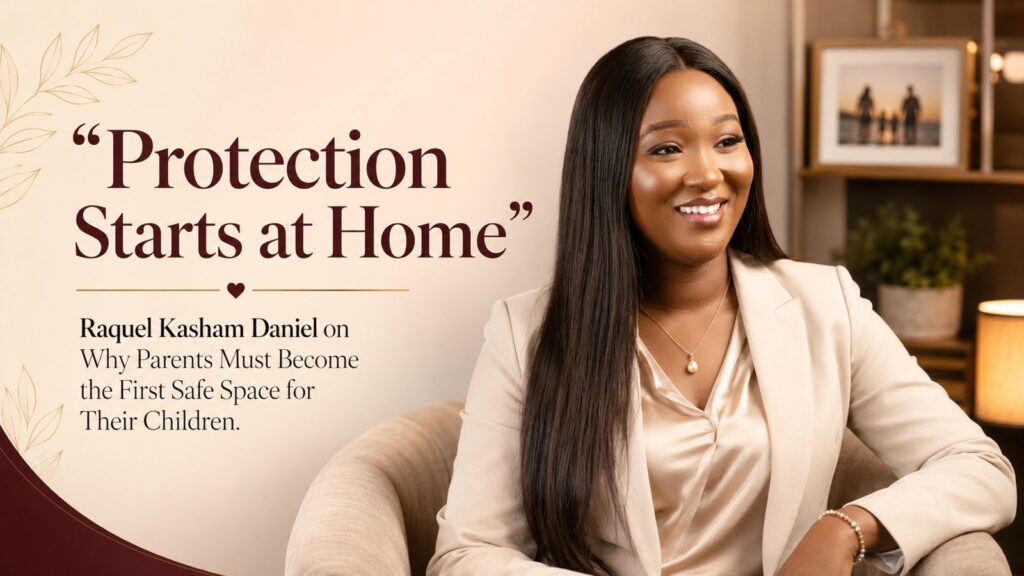

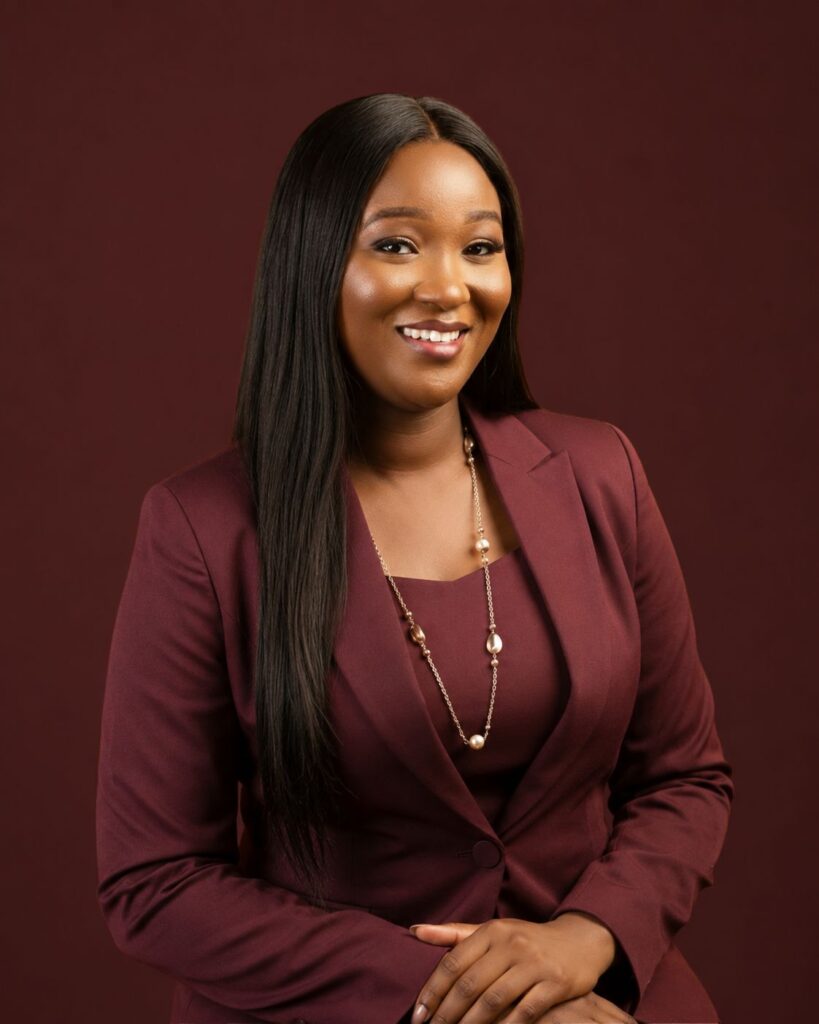
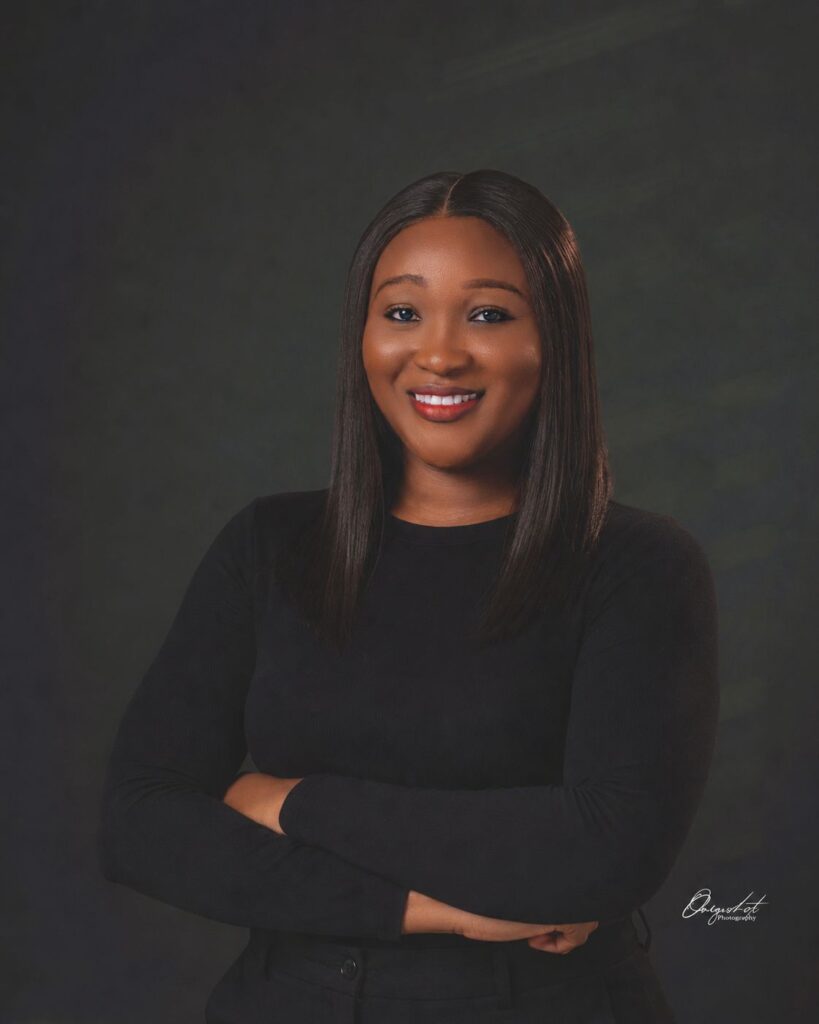
Raquel Kasham Daniel is a social entrepreneur, author, girl-child advocate, and Founder/CEO of Beyond the Classroom Foundation, a Nigeria-based nonprofit working to make education, safety, dignity, and leadership possible for girls in underserved communities.
Over the years, through Beyond the Classroom Foundation, Raquel has led programs that support girls to stay in school, return to school, understand their rights, build confidence, and grow up in safer homes, schools, and communities. Her work has reached thousands of girls, boys, parents, teachers, and community stakeholders across schools, IDP communities, and underserved areas in Nigeria.
She is also the brain behind the Safer Girls Approach, a framework that looks at girl-child safety beyond one activity or one training. The approach focuses on four connected areas: Safer Homes, Safer Communities, Safer Classrooms, and Safer Girls.
As the world marks Global Day of Parents, Raquel speaks on why parenting must go beyond provision, why children need homes where they can speak freely, and why parents must become the first safe space for their children.
Interview
1. What does Global Day of Parents mean to you?
For me, Global Day of Parents is one of those days that should make us pause a little.
Because when we talk about parents, many times we focus on provision. Has the child eaten? Are school fees paid? Is there a roof over their head? And of course, all of that is important. Very important, especially with how things are now.
But parenting is also more than providing.
Children need to feel safe with us. They need to feel heard. They need to know that if something happens, home is the first place they can run to, not the last place they are afraid of.
So for me, Global Day of Parents is a reminder that parents are not just providers. Parents are protectors. Parents are the first safe space a child should have.
Before a child meets the school, the community, or the world, the child first meets home. So if home is safe, it gives that child a stronger foundation.
2. Why is this issue important to your work at Beyond the Classroom Foundation?
It is important because of what we see in the field.
At Beyond the Classroom Foundation, we work with girls in schools and communities. We work with girls who are in school, girls who are out of school, girls in vulnerable communities, and girls who are carrying things that are honestly too heavy for their age.
And one thing we keep seeing is that the home matters a lot.
You can mentor a girl. You can train her. You can give her books, pads, confidence sessions, leadership sessions, all of that. But if she is going back to a home where nobody listens to her, where she is constantly blamed, where her dreams are dismissed, or where she is afraid to speak, then the work is not complete.
That is why, for us, Safer Homes is very important.
We cannot keep telling girls to speak up if the first place they should speak does not make room for their voice.
3. When you say parents should be the first safe space, what do you mean?
I mean a child should be able to come home and say, “Mummy, this happened,” or “Daddy, I am not okay,” without first calculating how much trouble they will enter.
That is what I mean.
It does not mean parents will always have the perfect answer. Nobody has all the answers. Parenting itself is not easy. But children should know that even when the conversation is difficult, they will still be listened to.
Sometimes, children start with small things. They may tell you something that looks simple, but in their mind, they are watching your reaction. They are asking themselves, “Can I trust this person with bigger things?”
So if every small conversation ends with shouting, insult, or dismissal, the child learns to keep quiet.
And that is dangerous, because the day something serious happens, they may not come to you.
4. What are some things parents do that may make children silent?
Sometimes, it is not even the big things. It is the everyday reactions.
A child says something and we say, “Keep quiet, what do you know?”
A girl asks a question and we say, “Why are you asking that kind of question?”
A boy is crying and we say, “Are you not a man?”
A child reports something and the first thing we ask is, “What were you doing there?”
Many of us grew up hearing these things, so sometimes we repeat them without thinking. But those words can close a child up.
And children are very observant. They watch how we respond. They watch how we talk about other people’s children. They watch how we blame victims. They watch how we dismiss pain.
So by the time they are going through something, they already know whether home is safe enough for the truth.
That is why we have to be careful. Correction is important, yes. Discipline is important. But if a child only knows fear at home, they may hide even the things that can harm them.
5. Some parents may say, “I am doing my best. I pay school fees and provide for my children.” What would you say to them?
I would first say, you are trying.
Honestly, many parents are trying. Things are hard. Providing for children is not small work. Paying school fees, feeding the family, paying rent, showing up every day, it is a lot.
So this conversation is not to condemn parents.
But at the same time, we have to remind ourselves that children need more than school fees.
A child can be in a good school and still feel lonely.
A child can eat every day and still be emotionally hungry.
A child can wear a clean uniform and still be afraid.
So yes, provision matters. But presence also matters.
Sometimes, what a child needs is for you to sit down and say, “Come, tell me what happened.” Not with anger. Not with judgment. Just with the willingness to listen.
That kind of presence can save a child.
6. How can parents build safer homes for children, especially girls
I think it starts with listening.
And I know listening sounds simple, but it is not always simple. Because sometimes children will say things that make us uncomfortable. Sometimes they will ask questions we are not ready for. Sometimes they will make mistakes.
But listening does not mean you agree with everything. It means you are giving the child room to speak before you react.
For girls especially, we need to stop shaming them for growing up. A girl’s body will change. She will menstruate. She will become curious. She will have questions. If home does not answer those questions with love and truth, she will get answers somewhere else.
And we should talk to boys too. Boys also need guidance. Boys need to learn respect, kindness, consent, responsibility, and how to express themselves without violence.
So a safer home is not just about protecting girls from boys. It is also about raising boys who know how to respect girls.
7. Why do you think many children struggle to speak to their parents?
Fear. I think fear is a big one.
Fear of being beaten. Fear of being blamed. Fear of being insulted. Fear of being called spoilt. Fear that nobody will believe them. Fear that the matter will become worse.
And sometimes, the fear is not even from what happened to them directly. It is from what they have seen.
They have seen how another child was treated. They have heard adults say, “These children of nowadays.” They have watched parents blame victims. They have seen people protect adults and silence children.
So they keep quiet.
That is why we cannot just assume our children know they can talk to us. We have to keep showing them. We have to say it, but more than saying it, we have to act like it.
Because children believe what they see more than what we announce.
8. What role do parents play in keeping girls in school?
Parents play a very big role.
For many girls, staying in school is not just about whether there is a school nearby. It is also about what the family believes about her future.
If a family believes that educating a girl is a waste, that girl is already at risk. If a family believes that once things are hard, the girl should be the one to stay back at home, that girl is at risk. If a girl is expected to carry all the house chores, care for younger siblings, hawk, or marry early, school becomes harder for her.
And we have met girls like this.
Many girls are not out of school because they are not brilliant. Some are out of school because life happened. Poverty happened. Pregnancy happened. Family pressure happened. No support happened.
So parents must understand that educating a girl is not a favour. It is her right. And it is also protection.
When a girl is in school, she has more options. She has more exposure. She has a better chance to dream and to choose differently.
9. What is your message to parents raising children in today’s world?
Please be close enough for your children to reach you.
That is my message.
The world is very loud now. Children are learning from everywhere. Their phones, their friends, social media, neighbours, school, everywhere. So if we are not creating room for honest conversations at home, someone else will fill that space.
And the truth is, not everybody speaking to your child means well.
So don’t only ask, “Have you eaten?”
Ask, “How are you really doing?”
Don’t only ask, “Did you pass?”
Ask, “Are you okay?”
Don’t only correct the mistake. Try to understand what led to it.
Children need correction, yes. But they also need connection. If there is no connection, correction will just sound like noise to them.
10. What is your final message on Global Day of Parents?
My final message is simple: protection starts at home.
If we want safer children, we must build safer homes. If we want girls to speak up, home must be safe enough to hear them. If we want boys to grow into kind, responsible men, home must also teach them that.
Parents will not always get it right. None of us will. But we can keep learning. We can listen better. We can apologize when we get it wrong. We can pay attention. We can create homes where children are not afraid to tell the truth.
So to every parent, caregiver, guardian, aunty, uncle, teacher, or adult raising a child, please remember this: your voice matters. The way you respond matters. The way you listen matters.
Let home be the first place where children feel safe.
Because when homes are safer, children are safer. And when children are safer, their future has a better chance.