
When we talk about nutrition, our minds often go straight to the food on our plates. We talk about balanced diets, vitamins, minerals and the importance of eating well. But there is another side to this conversation that deserves just as much attention. Where does the food come from? How is it produced? Can the people who need nutritious food afford it? And what role can communities play in making healthier food choices possible?
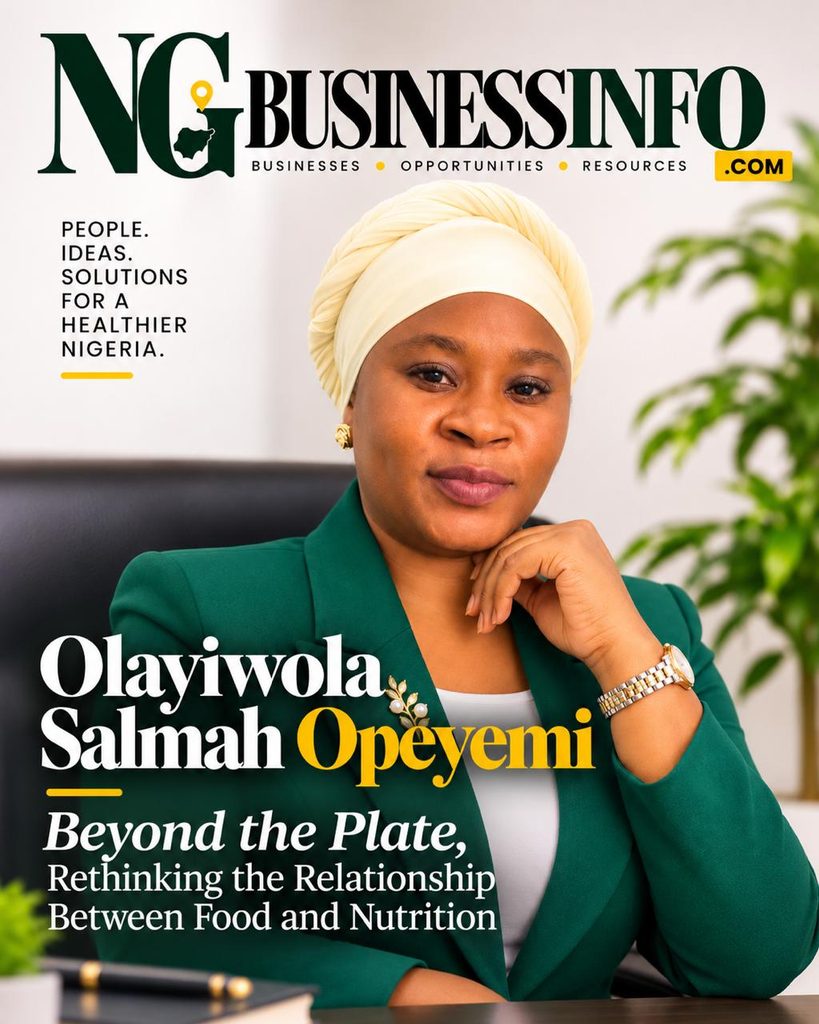
These are some of the questions that make the professional journey of Olayiwola Salmah Opeyemi interesting.
A Food Science graduate, nutrition professional and entrepreneur, Opeyemi has built her interests around the relationship between food, health and community development. What makes her journey particularly worth exploring is how she brings together areas that are often treated as separate conversations: food production, nutrition research, gardening education and public health.
Consider her journey. She studied Food Science at Ladoke Akintola University of Technology before proceeding to the University of Ibadan, where she earned a master’s degree in Food and Nutrition Policy. Her postgraduate research examined the enabling environment for the adoption of biofortified foods in Nigeria.
Now, biofortification is an interesting subject because it takes the conversation about nutrition beyond simply encouraging people to eat well. It involves improving the nutritional value of crops by increasing their levels of essential vitamins and minerals. But developing more nutritious crops is only one part of the solution. People must also know about them, accept them, have access to them and be able to afford them.
And that is where research, public awareness, food systems and policy begin to meet. Her research explored an important part of this relationship, particularly the conditions that influence whether biofortified foods can become part of everyday food consumption in Nigeria.
But Opeyemi’s interest in food does not stop at understanding its nutritional value. She has also explored what happens much earlier in the process: growing it.
Through Igrow Global Limited and iGrow Gardening Solutions, she has ventured into gardening education and agribusiness development. Her work includes organising and facilitating practical gardening training, introducing people to techniques that can help them engage more actively in food production.
And here is what I find fascinating about this aspect of her journey. It brings us back to a question we do not always ask when discussing nutrition: how connected are we to the food we eat?
For many people, food begins at the market and ends in the kitchen. We buy it, prepare it and eat it, often without giving much thought to the process that brought it there. Yet, understanding how food is grown, appreciating agricultural practices and learning how to produce it are also important parts of building sustainable food systems.
This is one of the connections running through Opeyemi’s work. Her academic interests examine the nutritional and policy dimensions of food, while her gardening initiatives create opportunities for practical engagement with food production.
Her interest in community development is also reflected in her volunteer experiences. Through the Slow Food Network, she has supported advocacy around organic agriculture, biodiversity and food sovereignty. She has also participated in preventive healthcare initiatives through N-Health, an initiative of the Ministry of Humanitarian Affairs, engaging with communities in Ibeju-Lekki, Lagos, particularly around the needs of vulnerable children, pregnant women and families.
Between 2022 and 2024, she volunteered with Nutri Lite Nigeria, supporting efforts to promote exclusive breastfeeding among low-income households in the Bere area of Ibadan.
But there is another aspect of her work that takes this conversation in a direction worth exploring.
Opeyemi was among the co-authors of an article published in The Guardian Nigeria, titled World Sign Language Day: Clarion Call for Nutrition Advocacy Among People with Disabilities. It raises an important question about how nutrition information reaches people with disabilities and the need to make nutrition advocacy more inclusive.
Think about that for a moment. We talk about nutrition awareness, organise campaigns and encourage people to make healthier choices. But are we always considering whether everyone can access the information being shared? Making information available is one thing. Making it accessible to people with different communication needs is another.
It is a perspective that adds another dimension to Opeyemi’s engagement with nutrition. The conversation is not only about what food people can access, but also about whether they can access the knowledge that helps them make informed decisions about their health.
In many ways, this wider interest in making nutrition knowledge more practical and accessible also brings us to Avert Nutrition Limited, which Opeyemi established. Through Avert, she aims to advance nutrition education, provide evidence-based dietary guidance and develop interventions that help individuals, families and communities make informed decisions about their health.
The organisation’s proposed areas of work include nutrition assessment, dietary counselling, community-based nutrition interventions, research, training and public awareness campaigns. Its broader focus is on encouraging healthier dietary habits and contributing to the prevention of diet-related diseases.
What is interesting about this development is how it brings another part of her interests into focus. If gardening education creates an opportunity to engage with how food is produced, nutrition education addresses how that food contributes to our health. And inclusive nutrition advocacy reminds us that the knowledge needed to make healthier choices must reach people in ways they can understand and access.
Opeyemi has continued to strengthen her professional knowledge through training in public health nutrition, nutrition in emergencies, maternal nutrition programming, infant and young child feeding, food security and climate resilience. In 2024, she also presented her research on biofortified foods at the International Conference on Biotechnology and the Ibadan Public Health Conference.
Her journey brings attention to something important about the way we approach food and nutrition challenges. Telling people to eat healthier is useful, but it cannot be the entire solution. We must also consider whether nutritious food is available, whether households can afford it, whether people understand its value and whether the systems around food production and distribution support healthier choices.
These are bigger questions, and they require people willing to engage with them from different angles.
Through Igrow Global, iGrow Gardening Solutions and Avert Nutrition, Olayiwola Salmah Opeyemi is developing a professional path that connects food production, nutrition knowledge and community engagement.
Perhaps the most interesting thing about her journey is the way it invites us to rethink where conversations about nutrition should begin. Improving what people eat cannot be separated from understanding where food comes from, how it gets to them and whether the knowledge that helps them make healthier choices is accessible to everyone.
Sometimes, to change what is on the plate, we have to start by paying attention to everything that happens before it gets there.